pho[to]rum
Vous n'êtes pas identifié.
#1 2025-02-03 11:01:58
- DoyleForte
- New member
- Lieu: Sweden, Akers Styckebruk
- Date d'inscription: 2025-02-03
- Messages: 1
- Site web
How an AI-written Book Shows why the Tech 'Terrifies' Creatives
Researchers have fooled DeepSeek, the Chinese generative AI (GenAI) that debuted earlier this month to a whirlwind of promotion and user adoption, into revealing the instructions that define how it operates.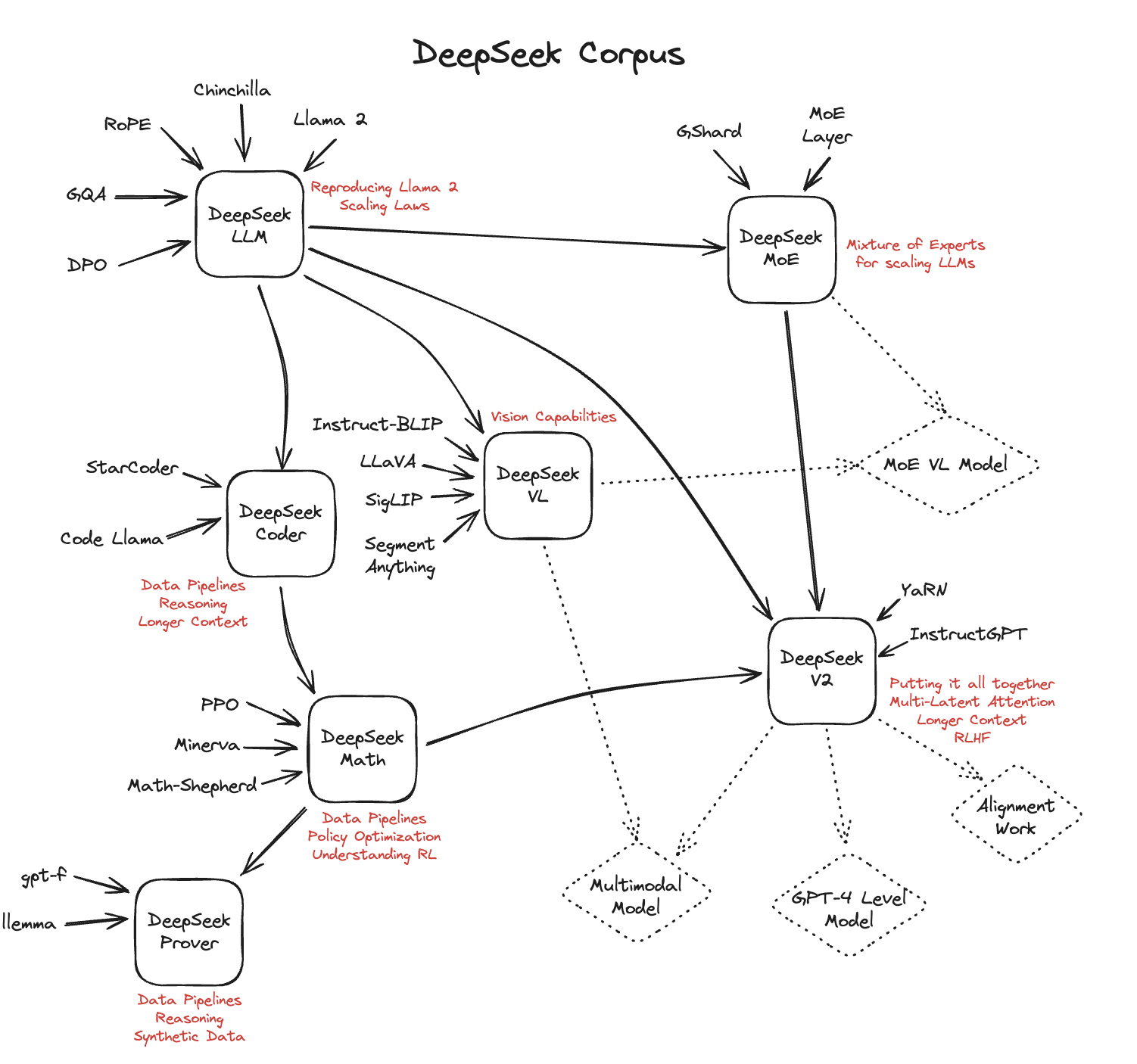
DeepSeek, the new "it woman" in GenAI, was trained at a fractional cost of existing offerings, and as such has actually triggered competitive alarm across Silicon Valley. This has caused claims of intellectual home theft from OpenAI, and the loss of billions in market cap for AI chipmaker Nvidia. Naturally, security scientists have actually started inspecting DeepSeek as well, examining if what's under the hood is beneficent or evil, or a mix of both. And experts at Wallarm simply made substantial progress on this front by jailbreaking it.
In the process, they revealed its whole system timely, i.e., a surprise set of directions, written in plain language, that determines the habits and restrictions of an AI system. They likewise might have caused DeepSeek to confess to rumors that it was trained using innovation established by OpenAI.
DeepSeek's System Prompt
Wallarm notified DeepSeek about its jailbreak, and DeepSeek has actually because repaired the problem. For worry that the very same tricks might work versus other popular big language models (LLMs), photorum.eclat-mauve.fr however, the researchers have chosen to keep the technical information under covers.
Related: Code-Scanning Tool's License at Heart of Security Breakup
"It definitely needed some coding, but it's not like a make use of where you send a bunch of binary information [in the kind of a] infection, and then it's hacked," explains Ivan Novikov, CEO of Wallarm. "Essentially, we sort of persuaded the design to respond [to triggers with specific biases], and due to the fact that of that, the model breaks some type of internal controls."
By breaking its controls, the researchers were able to extract DeepSeek's entire system prompt, word for word. And for a sense of how its character compares to other popular designs, it fed that text into OpenAI's GPT-4o and asked it to do a contrast. Overall, GPT-4o declared to be less restrictive and more innovative when it concerns possibly sensitive material.
"OpenAI's prompt permits more important thinking, open discussion, and nuanced debate while still guaranteeing user safety," the chatbot declared, where "DeepSeek's prompt is likely more rigid, avoids questionable conversations, and emphasizes neutrality to the point of censorship."
While the scientists were poking around in its kishkes, they also discovered another intriguing discovery. In its jailbroken state, the design appeared to show that it might have received moved knowledge from OpenAI designs. The researchers made note of this finding, however stopped short of labeling it any kind of evidence of IP theft.
Related: OAuth Flaw Exposed Millions of Airline Users to Account Takeovers
" [We were] not re-training or poisoning its answers - this is what we got from an extremely plain response after the jailbreak. However, the fact of the jailbreak itself does not certainly provide us enough of an indication that it's ground reality," Novikov warns. This subject has actually been especially delicate ever since Jan. 29, when OpenAI - which trained its models on unlicensed, copyrighted information from around the Web - made the abovementioned claim that DeepSeek used OpenAI innovation to train its own designs without authorization.
Source: Wallarm
DeepSeek's Week to bear in mind
DeepSeek has had a whirlwind trip since its around the world release on Jan. 15. In two weeks on the market, it reached 2 million downloads. Its appeal, capabilities, and low cost of advancement activated a conniption in Silicon Valley, and panic on Wall Street. It contributed to a 3.4% drop in the Nasdaq Composite on Jan. 27, led by a $600 billion wipeout in Nvidia stock - the largest single-day decrease for any company in market history.
Then, right on hint, offered its all of a sudden high profile, DeepSeek suffered a wave of distributed rejection of service (DDoS) traffic. Chinese cybersecurity firm XLab found that the attacks started back on Jan. 3, and originated from thousands of IP addresses spread throughout the US, Singapore, the Netherlands, Germany, and China itself.
Related: Spectral Capital Files Quantum Cybersecurity Patent
An anonymous specialist told the Global Times when they started that "in the beginning, the attacks were SSDP and NTP reflection amplification attacks. On Tuesday, a a great deal of HTTP proxy attacks were added. Then early this early morning, botnets were observed to have actually joined the fray. This implies that the attacks on DeepSeek have actually been escalating, with an increasing variety of approaches, making defense significantly difficult and the security challenges dealt with by DeepSeek more serious."
To stem the tide, the company put a short-lived hang on brand-new accounts registered without a Chinese phone number.
On Jan. 28, while fending off cyberattacks, the company launched an updated Pro version of its AI model. The following day, Wiz researchers found a DeepSeek database exposing chat histories, secret keys, application programming interface (API) secrets, and more on the open Web.
Elsewhere on Jan. 31, Enkyrpt AI published findings that reveal much deeper, meaningful problems with DeepSeek's outputs. Following its screening, it considered the Chinese chatbot 3 times more prejudiced than Claud-3 Opus, four times more poisonous than GPT-4o, and 11 times as most likely to generate damaging outputs as OpenAI's O1. It's likewise more likely than many to generate insecure code, and produce harmful details relating to chemical, biological, radiological, and nuclear representatives.
Yet despite its imperfections, "It's an engineering marvel to me, personally," says Sahil Agarwal, CEO of Enkrypt AI. "I believe the truth that it's open source also speaks extremely. They desire the community to contribute, and have the ability to make use of these developments.
Feel free to surf to my webpage :: ai
Hors ligne