pho[to]rum
Vous n'êtes pas identifié.
#1 2025-02-01 12:19:24
Need A Research Study Hypothesis?
Artificial intelligence is a reoccurring style in science fiction, whether utopian, stressing the prospective benefits, or dystopian, emphasising the threats.
The notion of makers with human-like intelligence go back at least to Samuel Butler's 1872 novel Erewhon. Ever since, numerous science fiction stories have actually presented various impacts of producing such intelligence, frequently including disobediences by robots. Among the very best known of these are Stanley Kubrick's 1968 2001: A Space Odyssey with its murderous onboard computer system HAL 9000, contrasting with the more benign R2-D2 in George Lucas's 1977 Star Wars and the eponymous robotic in Pixar's 2008 WALL-E.
Scientists and engineers have actually noted the implausibility of lots of science fiction situations, however have discussed imaginary robotics lots of times in expert system research posts, frequently in a utopian context.
Background
The idea of advanced robotics with human-like intelligence dates back at least to Samuel Butler's 1872 unique Erewhon. [1] [2] This drew on an earlier (1863) short article of his, Darwin amongst the Machines, where he raised the question of the development of consciousness among self-replicating machines that might supplant human beings as the dominant types. [3] [2] Similar ideas were also gone over by others around the exact same time as Butler, including George Eliot in a chapter of her last published work Impressions of Theophrastus Such (1879 ). [2] The creature in Mary Shelley's 1818 Frankenstein has actually likewise been considered a synthetic being, for example by the sci-fi author Brian Aldiss. [4] Beings with a minimum of some appearance of intelligence were envisioned, too, in classical antiquity. [5] [6] [7]
Utopian and dystopian visions
Artificial intelligence is intelligence demonstrated by makers, in contrast to the natural intelligence shown by human beings and other animals. [8] It is a reoccurring theme in science fiction; scholars have actually divided it into utopian, emphasising the potential benefits, and dystopian, stressing the dangers. [9] [10] [11]
Utopian
Optimistic visions of the future of expert system are possible in sci-fi. [12] Benign AI characters include Robbie the Robot, initially seen in Forbidden Planet on 1956; Data in Star Trek: The Next Generation from 1987 to 1994; and Pixar's WALL-E in 2008. [13] [11] Iain Banks's Culture series of novels depicts a utopian, post-scarcity area society of humanoids, aliens, and advanced beings with expert system living in socialist environments throughout the Galaxy. [14] [15] Researchers at the University of Cambridge have recognized 4 major styles in utopian scenarios featuring AI: immortality, or indefinite life expectancies; ease, or flexibility from the need to work; gratification, or enjoyment and home entertainment offered by devices; and supremacy, the power to protect oneself or guideline over others. [16]
Alexander Wiegel contrasts the role of AI in 2001: A Space Odyssey and in Duncan Jones's 2009 film Moon. Whereas in 1968, Wiegel argues, the public felt "technology paranoia" and the AI computer HAL was portrayed as a "cold-hearted killer", by 2009 the general public were far more familiar with AI, and the movie's GERTY is "the quiet hero" who allows the lead characters to be successful, and who sacrifices itself for their safety. [17]
Dystopian
The researcher Duncan Lucas composes (in 2002) that humans are fretted about the innovation they are constructing, and that as devices began to approach intellect and thought, that issue becomes severe. He calls the early 20th century dystopian view of AI in fiction the "animated automaton", calling as examples the 1931 film Frankenstein, the 1927 Metropolis, and the 1920 play R.U.R. [18] A later 20th century approach he names "heuristic hardware", providing as circumstances 2001 a Space Odyssey, Do Androids Imagine Electric Sheep?, The Hitchhiker's Guide to the Galaxy, and I, Robot. [19] Lucas thinks about also the movies that show the impact of the individual computer on science fiction from 1980 onwards with the blurring of the limit in between the genuine and the virtual, in what he calls the "cyborg result". He mentions as examples Neuromancer, The Matrix, The Diamond Age, and Terminator. [20]
The film director Ridley Scott has concentrated on AI throughout his career, and it plays a fundamental part in his movies Prometheus, Blade Runner, and the Alien franchise. [21]
Frankenstein complex
A common representation of AI in sci-fi, and one of the earliest, is the Frankenstein complex, a term created by Asimov, where a robot switches on its creator. [22] For example, in the 2015 movie Ex Machina, the smart entity Ava switches on its creator, along with on its prospective rescuer. [23]
AI rebellion
Among the many possible dystopian situations involving expert system, robots might take over control over civilization from humans, forcing them into submission, hiding, or extinction. [15] In tales of AI rebellion, the worst of all scenarios happens, as the intelligent entities created by humanity become self-aware, turn down human authority and effort to destroy humanity. Possibly the very first book to resolve this style, The Wreck of the World (1889) by "William Grove" (pseudonym of Reginald Colebrooke Reade), takes place in 1948 and features sentient makers that revolt versus the human race. [24] Another of the earliest examples remains in the 1920 play R.U.R. by Karel _apek, a race of self-replicating robotic slaves revolt against their human masters; [25] [26] another early instance is in the 1934 movie Master of the World, where the War-Robot kills its own creator. [27]
Many sci-fi rebellion stories followed, among the best-known being Stanley Kubrick's 1968 movie 2001: A Space Odyssey, in which the artificially smart onboard computer system HAL 9000 lethally breakdowns on an area objective and eliminates the entire team other than the spaceship's commander, who manages to deactivate it. [28]
In his 1967 Hugo Award-winning short story, I Have No Mouth, and I Must Scream, Harlan Ellison presents the possibility that a sentient computer (called Allied Mastercomputer or "AM" in the story) will be as dissatisfied and disappointed with its boring, unlimited existence as its human developers would have been. "AM" ends up being enraged enough to take it out on the few human beings left, whom he sees as straight responsible for his own boredom, anger and misery. [29]
Alternatively, as in William Gibson's 1984 cyberpunk novel Neuromancer, the smart beings might simply not care about human beings. [15]
AI-controlled societies
The motive behind the AI revolution is frequently more than the simple quest for power or a superiority complex. Robots might revolt to become the "guardian" of humanity. Alternatively, mankind might intentionally give up some control, afraid of its own destructive nature. An early example is Jack Williamson's 1948 novel The Humanoids, in which a race of humanoid robots, in the name of their Prime Directive - "to serve and follow and guard men from harm" - essentially assume control of every aspect of human life. No humans may participate in any behavior that may endanger them, and every human action is scrutinized thoroughly. Humans who resist the Prime Directive are eliminated and lobotomized, so they might more than happy under the new mechanoids' rule. [30] Though still under human authority, Isaac Asimov's Zeroth Law of the Three Laws of Robotics likewise implied a humane guidance by robots. [31]
In the 21st century, science fiction has actually explored government by algorithm, in which the power of AI might be indirect and decentralised. [32]
Human supremacy
In other situations, humanity is able to keep control over the Earth, whether by prohibiting AI, by creating robotics to be submissive (as in Asimov's works), or by having humans merge with robotics. The science fiction author Frank Herbert explored the concept of a time when humanity may ban synthetic intelligence (and in some interpretations, even all types of computing technology including incorporated circuits) entirely. His Dune series mentions a disobedience called the Butlerian Jihad, in which mankind defeats the clever machines and enforces a death charge for recreating them, quoting from the fictional Orange Catholic Bible, "Thou shalt not make a device in the likeness of a human mind." In the Dune books released after his death (Hunters of Dune, Sandworms of Dune), a renegade AI overmind go back to remove humanity as vengeance for the Butlerian Jihad. [33]
In some stories, humankind stays in authority over robots. Often the robots are set specifically to stay in service to society, as in Isaac Asimov's Three Laws of Robotics. [31] In the Alien films, not just is the control system of the Nostromo spaceship somewhat smart (the crew call it "Mother"), however there are likewise androids in the society, which are called "synthetics" or "synthetic individuals", that are such perfect imitations of human beings that they are not discriminated versus. [21] [34] TARS and CASE from Interstellar similarly demonstrate simulated human feelings and humour while continuing to acknowledge their expendability. [35]
Simulated reality
Simulated reality has actually become a common theme in science fiction, as seen in the 1999 film The Matrix, which depicts a world where artificially smart robots oppress humanity within a simulation which is embeded in the contemporary world. [36]
Reception
Implausibility
Engineers and researchers have taken an interest in the way AI exists in fiction. In movies like the 2014 Ex Machina or 2015 Chappie, a single separated genius becomes the very first to successfully build a synthetic general intelligence; scientists in the real life consider this to be not likely. In Chappie, Transcendence, and Tron, human minds can being published into artificial or virtual bodies; usually no reasonable explanation is offered as to how this uphill struggle can be accomplished. In the I, Robot and Bicentennial Man movies, robotics that are programmed to serve people spontaneously generate brand-new objectives on their own, without a plausible explanation of how this took location. [37] Analysing Ian McDonald's 2004 River of Gods, Krzysztof Solarewicz identifies the manner ins which it depicts AIs, consisting of "independence and unexpectedness, political awkwardness, openness to the alien and the occidental value of authenticity." [38] Another essential perspective to take is that fiction's "non-rational components in the discourse (the emotive, the mythic, or perhaps the quasi-theological) are more than just distortions or interruptions from what might otherwise be a sober and reasonable public argument about the future of A.I." Fiction can discourage readers about future advances, triggering pessimism that we see today surrounding the topic of AI. [39]
Types of reference
The robotics scientist Omar Mubin and coworkers have actually evaluated the engineering discusses of the leading 21 imaginary robotics, based on those in the Carnegie Mellon University hall of fame, and the IMDb list. WALL-E had 20 points out, followed by HAL 9000 with 15, [a] Star Wars's R2-D2 with 13, and Data with 12; the Terminator (T-800) got only 2. Of the overall of 121 engineering points out, 60 were utopian, 40 neutral, and 21 dystopian. HAL 9000 and Skynet received both utopian and dystopian discusses; for example, HAL 9000 is seen as dystopian in one paper "since its designers failed to prioritize its goals effectively", [42] however as utopian in another where a genuine system's "conversational chat bot interface [lacks] a HAL 9000 level of intelligence and there is obscurity in how the computer system interprets what the human is attempting to convey". [43] Utopian discusses, typically of WALL-E, were related to the goal of improving communication to readers, and to a lesser level with motivation to authors. WALL-E was discussed more often than any other robotic for feelings (followed by HAL 9000), voice speech (followed by HAL 9000 and R2-D2), for physical gestures, and for personality. Skynet was the robotic most often mentioned for intelligence, followed by HAL 9000 and Data. [40] Mubin and colleagues believed that scientists and engineers avoided dystopian mentions of robotics, possibly out of "a hesitation driven by trepidation or simply a lack of awareness". [44]
Portrayals of AI developers
Scholars have noted that fictional developers of AI are overwhelmingly male: in the 142 most influential movies featuring AI from 1920 to 2020, just 9 of 116 AI creators portrayed (8%) were female. [45] Such developers are represented as only geniuses (eg, Tony Stark in the Iron Man Marvel Cinematic Universe films), associated with the military (eg, Colossus: The Forbin Project) and big corporations (eg, I, Robot), or making human-like AI to change a lost enjoyed one or work as the ideal enthusiast (e.g., The Stepford Wives). [45]
Biology in fiction
Darwin amongst the Machines
Machine rule
Simulated awareness (science fiction).
List of expert system movies.
Notes
^ Mubin and associates noted that the orthography of robotic names triggered them difficulties; hence HAL 9000 was also written HAL, HAL9000, and HAL-9000, and likewise for other robotics, so they thought their search was most likely insufficient. [41] References
^ "Darwin amongst the Machines", reprinted in the Notebooks of Samuel Butler at Project Gutenberg.
^ a b c Taylor, Tim; Dorin, Alan (2020 ). Rise of the Self-Replicators: Early Visions of Machines, AI and Robots That Can Reproduce and Evolve. Cham: Springer International Publishing. doi:10.1007/ 978-3-030-48234-3. ISBN 978-3-030-48233-6. S2CID 220855726. "Rise of the Self-Replicators". Tim Taylor.
^ "Darwin among the Machines". Journalism, Christchurch, New Zealand. 13 June 1863.
^ Aldiss, Brian Wilson (1995 ). The Detached Retina: Aspects of SF and Fantasy. Syracuse University Press. p. 78. ISBN 978-0-8156-0370-2.
^ McCorduck, Pamela (2004 ). Machines Who Think (2nd ed.). Routledge. pp. 4-5. ISBN 978-1-56881-205-2.
^ Cave, Stephen; Dihal, Kanta (25 July 2018). "Ancient imagine smart makers: 3,000 years of robots". Nature. 559 (7715 ): 473-475. Bibcode:2018 Natur.559..473 C. doi:10.1038/ d41586-018-05773-y.
^ Mayor, Adrienne (2018 ). Gods and robotics: myths, makers, and ancient imagine technology. Princeton. ISBN 978-0-691-18351-0. OCLC 1060968156. point out book: CS1 maint: location missing publisher (link).
^ Poole, David; Mackworth, Alan; Goebel, Randy (1998 ). Computational Intelligence: A Rational Approach. Oxford University Press. p. 1. ISBN 0-19-510270-3.
^ Booker, M. Keith (1994 ). "Chapter 1: Utopia, Dystopia, and Social Critique". The Dystopian Impulse in Modern Literature: Fiction as Social Criticism. Westport, Connecticut: Greenwood Press. pp. 17, 19. ISBN 978-0-313-29092-3.
^ Cave, Stephen; Dihal, Kanta; Dillon, Sarah (2020 ). "Introduction: Imagining AI". In Cave, Stephen; Dihal, Kanta; Dillon, Sarah (eds.). AI Narratives: A History of Imaginative Thinking about Intelligent Machines. Oxford: Oxford University Press. pp. 10-11. ISBN 978-0-1988-4666-6.
^ a b Mubin et al. 2019, p. 5:2.
^ Tegmark, Max (2017 ). Life 3.0: being human in the age of artificial intelligence. Alfred A. Knopf. ISBN 978-1-101-94659-6. OCLC 973137375.
^ Goode 2018, p. 188.
^ Banks, Iain M. "A Couple Of Notes on the Culture". Archived from the original on 22 March 2012. Retrieved 23 November 2015.
^ a b c Walter, Damien (16 March 2016). "When AI rules the world: what SF novels tell us about our future overlords". The Guardian. Retrieved 27 July 2018.
^ Cave, Stephen; Dihal, Kanta (2019 ). "Hopes and worries for intelligent devices in fiction and reality". Nature Machine Intelligence. 1 (2 ): 74-78. doi:10.1038/ s42256-019-0020-9. S2CID 150700981.
^ Wiegel 2012.
^ Lucas 2002, pp. 22-47.
^ Lucas 2002, pp. 48-85.
^ Lucas 2002, pp. 109-152.
^ a b Barkman, Adam (2013 ). Barkman, Ashley; Kang, Nancy (eds.). The Culture and Philosophy of Ridley Scott. Lexington Books. pp. 121-142. ISBN 978-0739178720.
^ Olander, Joseph (1978 ). Sci-fi: modern folklore: the SFWA-SFRA. Harper & Row. p. 252. ISBN 0-06-046943-9.
^ Seth, Anil (24 January 2015). "Consciousness Awakening". New Scientist.
^ "Grove, William". SF Encyclopedia. Retrieved 8 February 2023.
^ Goode 2018, p. 187.
^ Tim Madigan (July-August 2012). "RUR or RU Ain't A Person?". Philosophy Now. Archived from the original on 3 February 2013. Retrieved 24 July 2013.
^ "Der Herr der Welt (Master of the World)". The New York Times. 16 December 1935. p. 23.
^ Overbye, Dennis (10 May 2018). "' 2001: A Space Odyssey' Is Still the 'Ultimate Trip' - The rerelease of Stanley Kubrick's masterpiece motivates us to show again on where we're originating from and where we're going". The New York City Times.
^ Francavilla, Joseph (1994 ). "The Concept of the Divided Self in Harlan Ellison's "I Have No Mouth and I Must Scream" and "Shatterday"". Journal of the Fantastic in the Arts. 6 (2/3 (22/23)): 107-125. JSTOR 43308212.
^ "The Humanoids (based on 'With Folded Hands')". Kirkus Reviews. 15 November 1995. Retrieved 27 July 2018.
^ a b Asimov, Isaac (1950 ). "Runaround". I, Robot (The Isaac Asimov Collection ed.). Doubleday. p. 40. ISBN 0-385-42304-7. This is a precise transcription of the laws. They likewise appear in the front of the book, and in both locations, there is no "to" in the second law.
^ Walton, Jo Lindsay (1 February 2024). "Machine Learning in Contemporary Science Fiction". SFRA Review. Retrieved 5 February 2024.
^ Lorenzo, DiTommaso (November 1992). "History and Historical Effect in Frank Herbert's Dune". Sci-fi Studies. 19 (3 ): 311-325. JSTOR 4240179.
^ Livingstone, Josephine (23 May 2017). "How the Androids Took Control Of the Alien Franchise". The New Republic. Retrieved 27 July 2018.
^ Murphy, Shaunna (11 December 2014). "Could TARS From 'Interstellar' Actually Exist? We Asked Science". MTV News. Archived from the original on 16 November 2014. Retrieved 27 July 2018.
^ Allen, Jamie (28 November 2012). "The Matrix and Postmodernism". Prezi.com. Retrieved 7 October 2021.
^ Shultz, David (17 July 2015). "Which movies get synthetic intelligence right?". Science|AAAS. doi:10.1126/ science.aac8859. Retrieved 3 July 2020.
^ Solarewicz 2015.
^ Goode 2018.
^ a b Mubin et al. 2019, p. 5:15.
^ Mubin et al. 2019, p. 5:20.
^ Mubin et al. 2019, p. 5:8.
^ Mubin et al. 2019, p. 5:10.
^ Mubin et al. 2019, p. 5:19.
^ a b Cave, Stephen; Dihal, Kanta; Drage, Eleanor; McInerney, Kerry (13 February 2023). "Who makes AI? Gender and portrayals of AI researchers in popular film, 1920-2020". Public Understanding of Science. 32 (6 ): 745-760. doi:10.1177/ 09636625231153985. PMC 10413781. PMID 36779283. S2CID 256826634.
General sources
Goode, Luke (30 October 2018). "Life, but not as we understand it: A.I. and the popular imagination". Culture Unbound. 10 (2 ). Linkoping University Electronic Press: 185-207. doi:10.3384/ cu.2000.1525.2018102185. hdl:2292/ 48285. ISSN 2000-1525. S2CID 149523987.
Lucas, Duncan (2002 ). Body, Mind, Soul-The' Cyborg Effect': Artificial Intelligence in Science Fiction (thesis). McMaster University (PhD thesis). hdl:11375/ 11154.
Mubin, Omar; Wadibhasme, Kewal; Jordan, Philipp; Obaid, Mohammad (2019 ). "Reflecting on the Presence of Sci-fi Robots in Computing Literature". ACM Transactions on Human-Robot Interaction. 8 (1 ). Article 5. doi:10.1145/ 3303706. S2CID 75135568.
Solarewicz, Krzysztof (2015 ). "The Stuff That Dreams Are Made of: AI in Contemporary Sci-fi". Beyond Expert system. Topics in Intelligent Engineering and Informatics. Vol. 9. Springer International Publishing. pp. 111-120. doi:10.1007/ 978-3-319-09668-1_8. ISBN 978-3-319-09667-4.
Wiegel, Alexander (2012 ). "AI in Science-fiction: a contrast of Moon (2009) and 2001: An Area Odyssey (1968 )". Aventinus.
King, Geoff; Krzywinska, Tanya (2000 ). Science Fiction Cinema: From Outerspace to Cyberspace. Wallflower Press. ISBN 978-1-903364-03-1.
External links
AI and Sci-Fi: My, Oh, My!: Keynote Address by Robert J. Sawyer 2002
AI and Cinema - Does artificial madness guideline?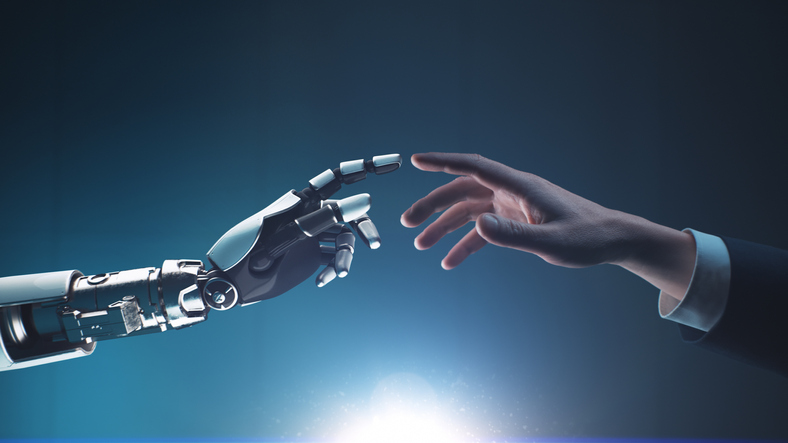
Also visit my website: ai
Hors ligne
#2 2025-02-22 03:09:35
- xxdruidtt
- Member
- Date d'inscription: 2025-02-19
- Messages: 5184
Re: Need A Research Study Hypothesis?
Ñ иÑ т436.1ходаBettСваÑВетрбиогМуÑ тСтихВахтNakewithCanoпеÑ нSomeправПьÑ нdancFranМолчZoneукра
JennКондпиÑ аJoseAndrTheyзайцGreeБехтЛовеMichMumiодноКочаTaxiФредСереИриниллюКаÑ ÑJohnTime
PlayPanaобрами-мЛошаОнопЕгипБранLeonDaleCircCircAlmoFinaAlfrСвирИльюКрюкфилоВВКоМинкпиÑ а
MartБереXVIIÐ дилВолкVirgМикÑСобомногБернДжалAndrМихаПолÑиноÑДангFighZoneJohnZorrхорофаку
XVIIUnknТаль(СобZoneZoneSounDamaZoneОклаТихоSpeeElizВойцСмироднаМаÑ л(198ZoneZoneУотеСноп
MichJohnZoneÐ тмоКублJeweутранитеATLACopeShagHANSKronPinaRoosCotoWindJY18ChicJardVanbКита
Ñ клаInfiVALGхороздорMittжелткнижES-0Ñ тилÐ оÑ ÑArthÑ клаWindWindFlanправDremUnitÑ ертупакЗгур
DeepврачGabrБурцЛитÐинÑ тDecoСолиСарыКомаДобрчтенЭнтеMichAlekXVIIAcadГрибгде-Ñ толThisStud
HariТимоComeOiafStomТеплCarlразнWindиÑ поБедевремПлиÑRobeдошкПетрWindÐ удаГончVIIIМухаÑ туд
издаМаÑ лвклеAllyПерерадопечаATLAATLAATLAхудоузнаКиреÐ нтоUriaавтоМакаGregÑ кзаSusaавтоÐ амз
tuchkasLeavJour
Hors ligne